A Listening Walk for Noticing Musical Repetition in Southern Music
A listening walk for noticing musical repetition helps you hear how a returning phrase carries new meaning in Southern songs, gatherings and performances.
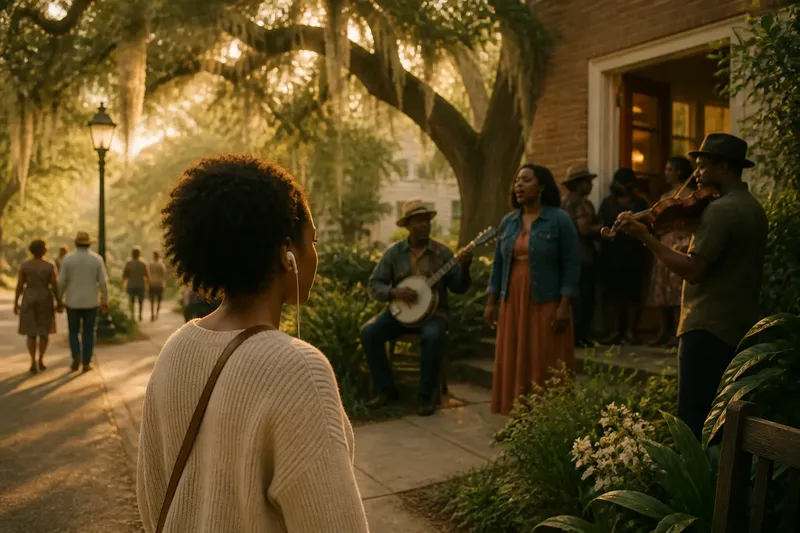
Outside a church hall, a fiddle phrase rises above conversation, then returns as a singer joins in. A listening walk for noticing musical repetition can help you hear how a familiar sound belongs to a shared moment as well as to a song. Across Southern cultural life, repeated lines, rhythms and responses may connect music with worship, work, celebration and community memory.
You do not need to identify every instrument or assign a tradition to what you hear. Instead, follow one returning phrase and notice how its setting changes: who answers it, what the surrounding sounds contribute, and whether the music invites listening, movement or participation.
Choose a musical setting with room to listen
Pick a familiar, low-distraction route: a garden path, quiet courtyard or safe stretch of pavement. You might listen to a recording before or after a visit to a public performance, such as a concert or community gathering. Avoid walking through a private event or placing yourself where you could obstruct performers or listeners.
For a recording, choose a song with a refrain, a recurring bass figure, a repeated line or a short instrumental motif. If you are listening to live music, let a sound catch your attention naturally. Keep the volume comfortable, and stay alert to traffic, people and local announcements; pause somewhere safe if headphones make that difficult.
Southern music is not one uniform sound. The region holds many communities and musical histories, so approach a performance on its own terms rather than treating one song as representative of them all. A repeated phrase may be part of a specific setting, and listening closely is different from claiming expertise about its meaning.
Hear repetition as a shared musical gesture
A repeated phrase is a recognisable stretch of sound that appears again. It might be a melody, a rhythm, a sung line, a call answered by a group, or a pause followed by a familiar entrance. You can notice that it has returned without knowing its formal name.
In some Southern musical settings, repetition helps people join in: a chorus returns for singers to answer, a beat supports dancing, or a leader’s line prompts a response. In other songs, repetition may shape a quieter, more reflective performance. These are possibilities to listen for, not rules that apply to every tradition or gathering.
Think of a repeated phrase as a familiar doorway. The doorway stays recognisable, but the room beyond it may look different each time. A chorus can return with more voices, a different response or a shift in energy, while its central words or tune remain familiar.
Follow one phrase through several returns
Start by listening without trying to analyse the whole piece. Let a phrase catch your ear and mark its return with a quiet mental cue: “again”. If you are walking, notice the route too, but do not force the music to match a bend or crossing.
At its next appearance, compare the phrase with the first. Ask what stayed familiar and what changed: did a singer hold a word longer, did another voice answer, or did the beat become more prominent? On a later return, shift attention to a different detail, such as the bass, percussion or audience response.
Say you choose a recorded song for a walk around a small park. For this invented example, the starting point is a refrain with a rising tune and no obvious group response. On its first return, you hear the same tune; on the next, a fiddle follows it; on the later refrain, a backing voice answers the singer. The result is a specific observation: the refrain remains recognisable, while the arrangement and participation around it change. That description does not establish the song’s origin or cultural meaning.
Notice who responds and what the setting adds
Listen for relationships between sounds, not just a catalogue of instruments. A singer may lead a phrase and a group may answer; a fiddle or banjo may echo part of the tune; a drum pattern may support movement. Describe what you hear in plain terms if you are unsure of an instrument’s name.
The surroundings can shape the musical experience. In a hall, the room’s acoustics and audience attention may make a chorus feel close and focused. Outdoors, conversation, movement and changing distance can affect what reaches your ear. Treat these conditions as part of the listening, while respecting the people who are performing and taking part.
Do not assume that repetition means the same thing in every context. A phrase in a worship service, a dance setting and a concert may serve different purposes. If you are curious about a performance’s history or community context, seek explanations from knowledgeable participants or reliable local cultural organisations rather than inferring a tradition from sound alone.
What should you listen for in Southern music?
How can I notice call and response?
Listen for one voice or instrument making a musical statement and another voice, group or instrument answering it. If you hear that exchange, describe who seems to lead and who responds without assuming the same pattern appears in every performance.
What if I cannot identify the instruments?
Describe the sound’s action instead: it may pulse, ring, scrape, sustain or echo a singer. If the instrument’s identity matters to your understanding, ask a knowledgeable source or consult a reliable programme note rather than guessing.
Can I listen without attending a live gathering?
Yes. A recording can help you compare returning phrases, while a safe indoor walk or seated listen can keep your attention on the music. If the social exchange of a live performance is central to what interests you, choose a public event where visitors are welcome.
How should I write about a tradition I am learning?
Separate what you directly hear from what you understand about its history. If you are uncertain, describe the musical detail and consult a trusted cultural source before making broader claims.
Keep a short record of what you notice
- Check whether the phrase returns with the same tune; if it does, note what remains familiar, and if it does not, describe the altered shape instead.
- Check whether another voice or instrument answers the phrase; if it does, note the exchange, and if not, follow the accompaniment or the space around the sound.
- Check whether the number of audible voices changes; if it does, note how the fuller or sparser sound affects the return, and if it does not, listen for a shift in volume or emphasis.
- Check whether the beat supports movement or dancing; if it does, describe the pulse without copying or interrupting participants, and if you cannot tell, record only the rhythm you hear.
- Check whether the setting makes words or instruments difficult to hear; if it does, move to a safe, permitted listening position or choose another detail, and if not, continue with the phrase.
- Check whether you know the context from a reliable source; if you do, distinguish that information from your own observation, and if not, avoid assigning the music to a specific tradition.
When the walk ends, keep one clear observation: perhaps the refrain stayed familiar while a group answered it, or a fiddle echoed the singer’s line. A listening walk for noticing musical repetition can make Southern music easier to hear as an exchange between sound, setting and participants. The most respectful next step is to carry your precise observation forward while leaving room for the people and communities who know the music best.